Asperger’s Syndrome

When you meet someone who has Asperger’s syndrome, you might notice two things right off. He’s just as smart as other folks, but he has more trouble with social skills. He also tends to have an obsessive focus on one topic or perform the same behaviors again and again.

Doctors used to think of Asperger’s as a separate condition. But in 2013, the standard book that mental health experts use, called The Diagnostic and Statistical Manual of Mental Disorders (DSM-5), changed how it’s classified.

Today, Asperger’s syndrome is part of a broader category called autism spectrum disorder (ASD). This group of related mental health issues shares some symptoms. Even so, lots of people still use the term Asperger’s.

The condition is what doctors call a “high-functioning” type of ASD. This means the symptoms are less severe than other kinds of autism spectrum disorders.

The DSM-5 also includes a new diagnosis, called social pragmatic communication disorder, which has some symptoms that overlap with Asperger’s. Doctors use it to describe people who have trouble talking and writing, but have normal intelligence.

Symptoms

They start early in life. If you’re a mom or dad of a kid who has it, you may notice that he can’t make eye contact. You may also find that your child seems awkward in social situations and doesn’t know what to say or how to respond when someone talks to him.

He may miss social cues that are obvious to other folks, like body language or the expressions on people’s faces. For instance, he may not realize that when somebody crosses his arms and scowls, he’s angry.

Another sign is that your child may show few emotions. He may not smile when he’s happy or laugh at a joke. Or he may speak in a flat, robotic kind of way.

If your child has the condition, he may talk about himself most of the time and zero in with a lot of intensity on a single subject, like rocks or football stats. And he might repeat himself a lot, especially on a topic that he’s interested in. He might also do the same movements over and over.

He also may dislike change. For instance, he may eat the same food for breakfast every day or have trouble moving from one class to another during the school day.

How You Get a Diagnosis

If you notice signs in your child, see your pediatrician. He can refer you to a mental health expert who specializes in ASDs, like one of these:

Psychologist. He diagnoses and treats problems with emotions and behavior.

Pediatric neurologist. He treats conditions of the brain.

Developmental pediatrician. He specializes in speech and language issues and other developmental problems.

Psychiatrist. He has expertise in mental health conditions and can prescribe medicine to treat them.

The condition is often treated with a team approach. That means you might see more than one doctor for your child’s care.

The doctor will ask questions about your child’s behavior, including:

What symptoms does he have, and when did you first notice them?
When did your child first learn to speak, and how does he communicate?
Is he focused on any subjects or activities?
Does he have friends, and how does he interact with others?

Then he’ll observe your child in different situations to see firsthand how he communicates and behaves.

Treatment

Every child is different, so there isn’t a one-size-fits-all approach. Your doctor might need to try a few therapies to find one that works.

Treatments can include:

Social skills training. In groups or one-on-one sessions, therapists teach your child how to interact with others and express themselves in more appropriate ways.

Speech-language therapy. This helps improve your kid’s communication skills. For example, he’ll learn how to use a normal up-and-down pattern when he speaks rather than a flat tone. He’ll also get lessons on how to keep up a two-way conversation and understand social cues like hand gestures and eye contact.

Cognitive behavioral therapy (CBT). It helps your child change his way of thinking, so he can better control his emotions and repetitive behaviors. He’ll be able to get a handle on things like outbursts, meltdowns, and obsessions.

Parent education and training. You’ll learn many of the same techniques your child is taught so you can work on social skills with him at home. Some families also see a counselor to help them deal with the challenges of living with someone with Asperger’s.

Applied behavior analysis. It’s a technique that encourages positive social and communication skills in your child — and discourages behavior you’d rather not see. The therapist will use praise or other “positive reinforcement” to get results.

Medicine. Therearen’t any drugs approved by the FDA that specifically treat Asperger’s. Some medications, though, can help with related symptoms like depression and anxiety. Your doctor may prescribe some of these:

Selective serotonin reuptake inhibitors (SSRIs)
Antipsychotic drugs
Stimulant medicines

With the right treatment, your child can learn to control some of the social and communication challenges he faces. He can do well in school and go on to succeed in life.

Posted in Health | Tagged , , , | Leave a comment

Do you have a niche job board?

Sometimes you just have to update your job search strategy and save time!

These days, to land a job over the competition, you have to work smarter. The hard part is to get your resume read by the right people at the right time. Good jobs aren’t on the market very long. To succeed your resume has to be available to the employer the moment they decide to fill a position.

One easy way to be found by employers who are looking to hire someone with your skills, is to post your resume on all the top job sites and niche job boards. This is a proven, documented method of successful job searching. While it may take a fair amount of time to find and fill out the forms of all these sites, you will definitely multiply your chances of landing a job.

If you want all the benefits without all the work, you can let a service like Resume Rabbit do it for you. You fill out one simple form and they’ll instantly post your resume on up to 92 top job sites like CareerBuilder, Job.com, Careercast, Dice & more. Then you’ll be seen by over 1.5 million employers & recruiters daily. It takes ONLY 5 minutes and saves 60 hours of research and data entry. Instantly post your resume on all the top job sites, to find a job faster.

Posted in Business | Tagged , , | Leave a comment

Pre-Existing Conditions to End ?

Photo: Getty Images

House Speaker Paul Ryan says that some of the Patient Protection and Affordable Care Act’s (PPACA) protections for the sick need to go.

The provision of the PPACA that forbids insurers from charging more to customers with preexisting conditions is one of the few aspects of the law that members of both parties are reticent to criticize, and which enjoys broad popularity among the public.

However, Ryan contends that that provision is driving up costs for everybody else. The most expensive customers, he said, should be moved to high risk pools run by states.

“Let’s fund risk pools at the state level to subsidize their coverage, so that they can get affordable coverage,” he said during a talk at Georgetown University. “You dramatically lower the price for everybody else. You make health insurance so much more affordable, so much more competitive and open up competition.”

Millennials across America are feeling the Bern… but why?

What remains to be seen is how setting up high risk pools, which existed before the PPACA, would reduce costs across the entire system. While premiums in the rest of the insurance pool may drop by getting rid of the most expensive customers, a pledge to subsidize the risk pools that they are shifted to means that taxpayers will still be paying for their care.

What Ryan appears to be proposing is simply shifting more of the payment burden to those with preexisting conditions, but offering subsidies to ensure that their insurance is still affordable. Indeed, in outlining its vision last week for high risk pools, the conservative Republican Study Committee suggested capping premiums for members at 200 percent of the average premium in a state.

Ryan’s proposal is not likely to be embraced by any Democrats and will likely be spurned by many Republicans, including Donald Trump.

If anything, Democrats hope that the upcoming election will put them in a position to expand the law at both the state and federal level, although it’s not clear how or to what extent. While Bernie Sanders’ “Medicare-for-all” plan is unlikely to be realized, a Democratic Congress could move to further expand Medicaid funding to states. And moves by Democrats in California to allow undocumented immigrants in that state access to the PPACA marketplace shows how state lawmakers might champion their own reforms.

By moving to expand the PPACA, Democrats are responding to their base, which has been energized by calls from Sanders and others to shift the health care system to resemble more closely those that exist in other western countries.

Polls continue to show a public that remains deeply divided on the PPACA. A recent survey by Pew found 44 percent of Americans approve of the law, while 54 percent disapprove.

However, that poll and another recent one by the Kaiser Family Foundation reveals that distaste for the PPACA also comes from liberals who do not believe the law goes far enough in reforming the health care system.

The Kaiser poll, which had support for Obamacare at only 38 percent, found that 51 percent of Democrats (including many favorable to the PPACA) say that they would like to see the law expanded. And among the quarter of self-described Democrats who say they don’t approve of the PPACA, 40 percent say they want to see it expanded.

“This increase may be due to the rhetoric surrounding universal health care in the Democratic presidential campaign, with both candidates advocating universal coverage as a goal,” stated the Kaiser report.

Neither of the recent polls asked respondents to opine on whether insurers should be required to cover those with preexisting conditions, but previous polling has suggested that arguing against that provision would be potentially perilous for Republicans.

Posted in Insurance | Tagged , , | Leave a comment

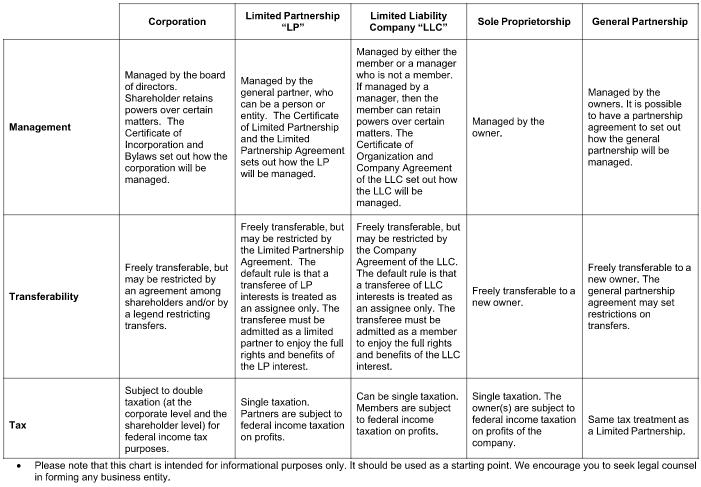
Texas Choice of Business Entities Chart

Posted in Business | Tagged , , , | Leave a comment

How come more people are retiring in their early 20s?

Thirty-five percent of Americans weren't in the labor force in 2014, up from 31.3 percent a decade earlier.

How come more people are retiring in their early 20s? Why are middle-age men becoming stay-at-home dads? What’s keeping women out of the workforce other than illness, kids or school?

Those are some of the questions raised in a new Bureau of Labor Statistics report that shows why people have stayed out of the labor force over the past decade. Finding answers is key for the Federal Reserve as it maps the contours of a job market that’s becoming harder to predict with the aging of the baby boomers and shifting household priorities.

The bureau found that 35 percent of the U.S. population wasn’t in the labor force in 2014, up from 31.3 percent a decade earlier. (You’re considered out of the workforce if you don’t have a job and aren’t looking for one. That’s distinct from the official unemployment rate, which tracks those out of work who are actively job hunting.)

Drilling down into the numbers reveals more about the shifts in the reasons some people forego a paycheck. In all age groups, for instance, more people cited retirement as the reason for being out of the labor force, and it wasn’t just older people.

Attention has turned to the likely pattern of increases over the coming months and years: How high will rates rise,…

The share of Americans between the ages of 20 and 24 sidelined over the past decade because they were in school increased during the decade that included the Great Recession. What’s more unusual is that the share of 20- to 24-year-olds who say they’re retired doubled from 2004 to 2014.

Other reasons for not working are also on the rise. More men between 25 and 54 cited home responsibilities, while women of the same age range increasingly point to illness or school as the leading cause. The data also shows that men and women without a high-school diploma are more than three times as likely to be out of the workforce than their peers with a college degree.

Demographic changes aren’t the only pieces of the puzzle that have changed the employment landscape since 2004. The BLS report showed that among male veterans between 25 to 54 years old, the number who reported a service-connected disability rose to 1.2 million in 2014, from 726,000 in 2003. That rise coincides with U.S. military combat in Iraq and Afghanistan.

Fewer people willing or able to take a job might eventually cause a shortage of workers, leading to a surge in wages and longer-term inflationary pressures, according to Princeton University economist Alan Blinder, a former Fed vice chairman.

“We’re going to be running out of labor as we go through time,” Blinder said on Bloomberg Television Dec. 31.

Understanding why people aren’t in the workforce — and whether it’s permanent or temporary — is important for the Fed. Policy makers are trying to estimate remaining slack in the labor market and the outlook for inflation as they weigh the timing of the next interest-rate increase.

But as Chair Janet Yellen told a press conference on Dec. 16, after the central bank lifted rates for the first time since 2006, it may be a while before Fed policy has to contend with an actual labor shortage.

“The labor-force participation rate is still below estimates of its demographic trend,” she said. “Involuntary part-time employment remains somewhat elevated and wage growth has yet to show a sustained pickup.”

Officials will get more information when the Labor Department releases December’s payroll report on Friday. Economists surveyed by Bloomberg News expect that employers added 200,000 last month, compared with 211,000 in November, while unemployment rate probably stayed at 5 percent.

Posted in Business | Tagged , , | Leave a comment

Travel and Work at the same time

Original open uri20150824 19448 18uygze?1440455977

It’s the dream: Take a three-month-long trip, and still have your job when you’re back home. While that may have been but a fantasy for most U.S. workers a few years ago, many more workplaces are allowing its employees to work outside of the office. But even if your job allows for it, working remotely can become impossible, especially when that dream trip involves hunting for Wi-Fi and a good place to sit in destinations that you’ve never visited before.

Good news: It doesn’t have to be this way.

In fact, websites now exist to help travelers find viable workspaces, regardless of where they are. No more struggling to find a distraction-free place work before exploring a new city: Here are five tools that will help you work remotely while you’re traveling.

1. Desks Near Me

Desks Near Me offers a pretty ideal solution for solo professional travelers, and those traveling together, especially for extended periods of time. The website—also available in app format—allows travelers to search for desks that aren’t being used in offices around the world, all based on their current location, how many desks they need, and their budget. Options exist on an hourly, daily, weekly, or even monthly basis. If you’re the kind of person who needs an office environment to get things done, this is your godsend when working and exploring a new city. Setting up an account is free and spaces start at around $20 an hour, with a different scale for longer periods of time.

2. ShareDesk

ShareDesk operates much like Desks Near Me. By inputting their current location, users can find workspaces that are available for rent on an hourly to monthly basis. Spaces can be booked and paid for online and are pre-verified by the website. An added perk: a 24/7 service team is available to ensure that all rentals go smoothly and that any problems are solved efficiently. ShareDesk offers more than 3,000 workspace venues in 70 countries and is growing on a daily basis. If you’re traveling—even to a remote area—and need to get work done, this website should be able to help you find a good temporary working environment.

3. WorkSnug

For those who love working in a very caffeinated situation, WorkSnug might be a better fit. The service is designed to help traveling professionals find locations to get work done that may be outside the realm of a traditional office setting—like a café or a park with access to Wi-Fi. Think of it as the Yelp for workspaces, where users are able to list where they’ve been able to get work done along with reviews, while those looking for work can run a search for a location near them. It’s free, so you can spend more money on cappuccinos.

4. Deskcamping

More limited as far as locations go—only available in London, Berlin and New York for the time being—Deskcamping is designed to help freelancers find desk space on a daily, weekly, or monthly basis. Think of it as the next big thing in the sharing economy culture that has cropped up online. Much like websites that allow homeowners to rent their spaces out to travelers—like Airbnb—Deskcamping allows businesses and building owners to post photos and descriptions of their spaces, to set their own rates, and to contact freelancers directly without outside involvement.

5. Liquid Space

Ever dream of launching a startup in a foreign country? Click onto Liquid Space, a service designed to connect small businesses with affordable spaces around the world. Scope out locations, contact owners, and book by the month online—all without going through a third-party realtor. The site offers a variety of spaces including standard offices, meeting rooms, or single desks. Prices vary depending on the needs of the traveler, and spaces are available around the world.

Want more?

← Back

Thank you for your response. ✨

Posted in Travel | Tagged , , , | Leave a comment

Will my Homeowners Insurance cover myself getting hurt?

When it comes to injuries, your homeowners insurance only covers your liability as a property owner, though. So if you or one of your family members were to be injured in your home, it’s not your homeowners insurance but your medical insurance that would be responsible for paying for those injuries.

Understanding Liability
Many people wonder if their homeowners insurance would pay for an injury that they got while at home. After all, guests and visitors aren’t the only people who can get hurt in your home. The same dangers that lie in wait for non-residents of your home to stumble upon are waiting for you and your family members as well. There is an important difference, though, between what insurance foots the bill when you get hurt at home and when a visitor gets hurt in your home.

As a homeowner, you are liable for many of the injuries a visitor can have in your home. In the event that an invited guest or unexpected visitor should be injured in your home through no fault of their own, your homeowners insurance would likely pay medical expenses and damages. It might even pay for lost wages if the injury resulted in the individual being out of work.

When Homeowners Insurance Doesn’t Pay
But what injuries of visitors would your homeowners insurance not pay for? Well, if someone was in your home acting in an irresponsible or negligent manner and you had no way to prevent them from having an accident, and their behavior causes the accident, then you would probably not be liable for that injury. However, if someone acting in a normal capacity is injured in your home—even from something that was not the result of any negligence on your part, you would likely be responsible.

Whether you do it to avoid insurance claims or to keep your family and friends safe, creating a home that is free of obvious threats to health and safety will save you both money and heartache. And while you can never create a totally risk-free zone, diligence and close observation can work together to help you remove the most obvious threats and cut down in the opportunity for injury that much more.

← Back

Thank you for your response. ✨

Posted in Louisiana, Louisiana Insurance | Tagged , , | Leave a comment

Getting ready for the Millennial Mountain

Are mortgage lenders ready for the millennial mountain?
The company whose software processes almost a quarter of US mortgage applications says that a mountain of young American homebuyers is about to enter the market.

Ellie Mae has just launched its Millennial Tracker tool to provide insight into the next generation of US homebuyers and says that they are ready to move but mortgage lenders need to have the right products in place.

“The mortgage industry is poised to experience a monumental shift as more millennial homebuyers begin to enter the market,” said Joe Tyrrell, executive vice president of corporate strategy at Ellie Mae. “There are roughly 87 million would-be homebuyers in the millennial generation and 91 percent of them say they intend to own a home one day. Lenders must prepare today to meet their needs.”

The firm’s data shows that 31 per cent of closed mortgages in March by millennials showed women as the primary borrower. Those female borrowers had an average age of 30 and a FICO score of 724. Male buyers made up 66 per cent of primary borrowers on closed loans; their average age was 29 with a FICO score averaging 727.

Since 2014, Ellie Mae says that 60 per cent of mortgages made to millennial homebuyers were conventional with 37 per cent FHA. Loans of both types took just less than 1.5 months to close.

Rent growth is slowing says national report
The growth in rents across the US has begun to level off. That’s the finding of Apartment List’s May 2016 National Rent Report which reveals that San Francisco, New York, Houston, LA, Denver and Austin have seen declining rents.

However, some markets continue to buck the trend with renters paying significantly more in Dallas, Nashville, Charlotte, Atlanta, and Phoenix.

In the year to April, median rents increased nationally by 2.8 per cent to $1,300 for a 2-bedroom apartment. San Francisco continues to have the highest median rents, despite recent declines; a 2-bedroom apartment in the city costs $4,690. New York is in second place ($4,480) followed by Jersey City, NJ ($3,180), Washington DC ($3,000) and Boston ($2,900).

These are the top remodeling projects
Room additions saw the largest gain in remodeling projects in the past 3 years according to a report from the National Association of Homebuilders. As it begins a month focused on remodeling, the association has been looking at which projects have been most prolific in recent years.

“While bathroom and kitchen remodels remain the most common renovations, basements, whole house remodels and both large and small scale additions are returning to levels not seen since prior to the downturn,” said 2016 NAHB Remodelers Chair Tim Shigley.

Although adding rooms was up 12 per cent, there has also been a rise in whole house remodeling (10 per cent), finished basements (8 per cent) and bathroom additions (7 per cent).

Posted in real estate | Tagged , , | Leave a comment

Life Insurance Agents and Commissions: What You Should Know

When shopping for life insurance, it’s important to know how agents get paid. Commissions can play a big role in which policies agents promote and how much coverage you get for your money.

How insurance commissions work

Commissions vary by policy and company, but  life insurance agents often receive 80% to 100% of the first year’s policy premium as commission.

“In fact, most of the time companies are in the hole in the first year,” notes Glenn Daily, a fee-only insurance advisor in New York City. Those commissions and other costs are why most permanent life insurance policies, such as whole life insurance, build no cash value in the first year.

If the policyholder stops paying premiums and allows a policy to lapse in the first year or two, the agent may have to pay back up to 100% of the commission to the life insurer.

Assuming the policyholder continues to pay premiums, agents typically continue to collect smaller commissions in subsequent years. Add it all up, and 15% to 25% of all the premiums you pay over the life of the policy could go to commissions and other costs, such as office expenses, according to Daily.

Life insurance companies paid out $11.5 billion in commissions on standard individual life insurance policies in 2014, according to a computation by data company SNL Financial, based on filings with the National Association of Insurance Commissioners. That was 9% of premiums collected on these policies. Commission shares varied widely among top insurers, from a low of 2.7% of premiums at Guardian to a high of 17.7% at Aegon.

Life Insurance Commissions

The share of premiums on standard individual life insurance policies going to commissions varied widely among top companies in 2014.
Company Premiums (billions) Commissions paid (billions) Commission share
Northwestern Mutual $13.4 $0.9 6.7%
New York Life $8.5 $0.4 5.1%
MetLife* $7.1 $0.3 3.9%
Prudential $6.3 $0.3 4.9%
Lincoln National $5.7 $0.7 13.0%
MassMutual $5.7 $0.4 6.9%
Manulife Financial $5.1 $0.5 10.1%
State Farm $4.3 $0.3 7.6%
Aegon $4.2 $0.7 17.7%
Guardian $3.8 $0.1 2.7%
American International Group $3.3 $0.3 10.0%
AXA $3.1 $0.3 10.4%
Pacific Mutual $3.0 $0.4 12.7%
Dai-ichi Life $2.4 $0.2 8.2%
Voya Financial $2.2 $0.2 8.1%
Primerica $2.1 $0.3 14.0%
Genworth Financial $1.9 $0.1 7.4%
Sammons Enterprises $1.9 $0.3 13.8%
Nationwide $1.7 $0.2 14.3%
Principal Financial Group $1.6 $0.1 5.8%

* Not including subsidiary American Life Insurance, which does a significant share of its business outside the U.S.
Source: SNL Financial, based on filings to the National Association of Insurance Commissioners.

Why you should care about agent commissions

Since the commission paid is a percentage of the premiums, agents have an incentive to promote pricier policies. This could be a reason for them to recommend more expensive permanent life insurance policies over cheaper term life insurance, even if the commission percentage were the same.

Life insurers do sometimes pay higher commission percentages for permanent policies, increasing the allure to agents. Consider this possible bias when you’re evaluating advice from an insurance agent, especially one who’s pushing a permanent policy when your needs can be met by a term life policy.

Finally, commissions slow the accumulation of cash value in permanent life insurance policies, especially in the first few years of the policy.

How to be a smart customer

One simple step you can take when buying life insurance is to ask insurance agents about their commissions.

“Agents have told me nobody asks,” Daily says. “People are reluctant to ask that because they don’t want to be confrontational.”

In New York, where Daily works, state law requires agents to disclose their commissions to customers — but only if asked. States commonly require agents only to disclose that they get a commission, not the amount. Model legislation from the National Association of Insurance Commissioners, often used as the basis for state laws, only requires disclosure of commissions if a customer is also paying an agent directly.

You might also consider buying from a “low-load” insurer, such as TIAA-CREF, which has salaried “consultants” rather than commissioned agents.

Most people who need life insurance are best off sticking with term life insurance, which has lower costs and commissions. That said, consumers who want to buy cash value life insurance through traditional insurers can lower the total commission by blending term and permanent policies to start with, and then buying additional permanent coverage over time to replace the term life component. The term life coverage has a lower commission, and the added permanent coverage (called “paid-up additions”) typically pays a relatively low commission of around 3%, according to Daily.

Want a Life Quote – Call me – 972-292-8967 or visit: http://www.InsurancePricedRight.com

Posted in Insurance | Tagged , , , | Leave a comment

Hiring the Millennials

Photo: AP

In 1994 these events occurred:

  • Forrest Gump won the Oscar for Best Film.
  • Seinfeld was the most popular TV show.
  • Lisa Loeb’s “Stay” and All-4-One’s “I Swear” topped the charts.
  • Most of the students graduating college this May were born (and I was 11 years old).

Graduation season will soon be upon us. When it comes to employee recruitment, research suggests that this latest generation to enter the workforce is one unlike any other.

Millennials are the fastest-growing demographic in the workforce today, and will comprise 75 percent of the global workforce by 2025. If attracting top graduates from the Class of 2016 is a priority for you as you fill your talent pipeline, now is the time to ensure your company is able to uncover what’s important to them and that it has processes, policies, and benefits packages in place that are in alignment with their unique goals and values.

Here are a few statistics you probably didn’t know about this new class of graduates that we all should consider as we hire and begin working with the newest group of employees to join our organizations.

Photo: Getty

1. This is the most diverse generation to enter the workforce.

According to Pew Research, 44 percent of millennials are part of a diverse community or ethnic group. That percentage is expected to continue to rise, as immigrants coming to the U.S. are disproportionately in their younger working years–in fact, the majority of new immigrant workers are between the ages of 20 and 35.

Takeaway: Creating an inclusive culture that addresses the needs and values of employees of different religious and cultural backgrounds has never been more important.

Photo: Getty

2. This group of employees is more entrepreneurial than any other.

The newest group to enter the workforce is shaking up the way our nation works.

Since the Industrial Age, each generation has entered the workforce with somewhat similar expectations: You study something. You get a job (usually in a place of work, like an office), and you stay there–for a long time.

Did you know that 79 percent of millennials would consider quitting their regular job and working for themselves? Fifty-two percent believe corporate loyalty is outdated and most–58 percent–expect to stay in their current job for fewer than three years.

Takeaway: Competition is fierce. Offering great benefits that address employees’ needs is one way you can ensure great candidates join your company over others–and stay.

Photo: Getty

3. An infrastructure that embraces new methods of communications is really important.

Chances are the soon-to-be graduate your team is meeting at college recruitment fairs hasn’t listened to a voicemail in weeks and doesn’t have a landline.

This generation is no longer plugged into the traditional methods of communication most offices still rely on, but more plugged in than ever to social media, text messages and their cell phones.  According to a recent Gallup study, most millennials check their cell phones at least hourly, and many report that they check it “every few minutes” and “a few times an hour.” I know I’m guilty!

Takeaway: The Class of 2016 will expect to be able to use the latest tech tools at work. Failure to embrace change will likely result in retention issues for companies that are slow to evolve.

This is the most connected group of people to ever enter the workforce. Ensuring your company is positioned well to foster an agile, collaborative culture is key.

Photo: AP

4. The Class of 2016 wants to make a difference, both at your company and in the world.

If you read a lot about millennials you’ve probably heard all of the same stereotypes I have (full disclosure: I am a millennial and I run a millennial-focused company). You may have heard that millennials are entitled, or perhaps narcissistic.

Let’s take the first one. Some see millennials as entitled entry-level workers who expect to get promoted quickly by playing foosball at work.

The truth is that the newest group of employees to enter your office will expect to work hard. Most already sleep with their phones next to their pillows and won’t mind working late, especially on something that will have a big impact on your company. In fact, 72 percent consider having “a job where I can make an impact” to be very important or essential to their happiness in their career.

At the same time, 78 percent say that a company’s Corporate Social Responsibility program affects their decision to join a company, and 64 percent use social media to address or engage with companies around social and environmental issues.

Most are optimistic and fully believe they can make a difference in their community and change the world. While changing the world may take some time to truly accomplish, empowering your millennial employees to do so will empower your organization for the future.

In fact, one could make the case that no other generation has been as optimistic about their ability to have an impact, both in the workplace and in the world.

Your company’s newest rising stars are ready for the workforce. The question is: Do you have the right policies and practices in place to ensure you are ready for them?

Posted in Business | Tagged , , , | Leave a comment